

Algebra 2 is where a lot of students hit a wall — polynomials, logarithms, and complex numbers can pile up fast. Ruvimo matches your teen with a dedicated tutor who learns exactly where they're stuck and builds from there, session after session. Same tutor, same face, real momentum.



Abhishek graduated from two of the world's most competitive engineering programs — IIT Patna and BITS Pilani — and has spent the past six years helping high school students crack the same kind of problems that once challenged him. His lessons connect Math and Physics to real engineering thinking, and parents regularly see their kids shift from struggling to confident.

Ajay R. has been teaching mathematics online since 2008, bringing over 15 years of experience to help students master Algebra, Geometry, and advanced topics. He specializes in working with high school students (grades 9–12) on the US curriculum, breaking down complex concepts into clear, manageable steps. His long track record of online instruction means he knows how to keep students engaged and motivated through screens.

Akshay holds a Master's degree in Engineering from one of the world's most rigorous STEM institutes and has spent five years helping high school students master advanced mathematics. He specializes in AP Calculus, AP Statistics, and algebra through pre-calculus, teaching from first principles to build genuine understanding rather than relying on memorization. Akshay's approach focuses on eliminating math anxiety and helping students see the logic behind every formula and concept.
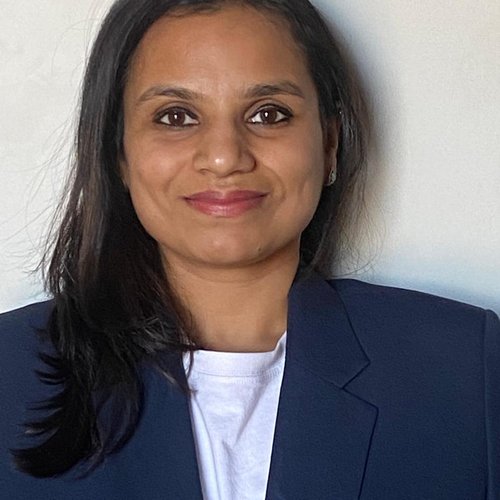
Chhavi is a dedicated mathematics educator with over 10 years of experience helping students build confidence and mastery in algebra, pre-algebra, and geometry. She has worked with hundreds of students across online and classroom settings, specializing in personalized instruction that combines clear conceptual understanding with practical problem-solving skills. Chhavi excels at meeting students where they are and creating learning experiences that make math accessible and engaging for learners in grades K-10.
.png)
Teacher Christi is an engineer and educator currently teaching at one of the top state universities in the Philippines. She is pursuing her Master of Science in Teaching (Physics) and holds a professional teaching license in Mathematics. With her combined background in engineering, physics, and mathematics, Teacher Christi integrates analytical thinking and practical application in her lessons. She believes that learning happens best through doing, encouraging her students to be diligent and engaged in practice. Her love for mathematics motivates her to help students see the subject not as a challenge, but as a tool for discovery. Outside of teaching, she enjoys reading and exploring history, which broadens her perspective as an academic and lifelong learner.

Jackielyn Rose C. is a professional mathematics teacher with 3 years of experience helping USA students across multiple states master algebra, pre-algebra, and geometry. She has a passion for breaking down complex math concepts into clear, understandable lessons and is currently pursuing her post-graduate studies to deepen her expertise. When she's not teaching, Jackielyn enjoys solving math problems and playing guitar.

Marco is a patient mathematics tutor with over 10 years of experience helping high school students master algebra, pre-algebra, and statistics. He holds a Master's degree in Applied Mathematics and brings both deep subject knowledge and proven teaching skills to every session. Marco is committed to building students' confidence and genuine understanding of mathematical concepts.

Musab Khan brings over five years of diverse teaching experience and advanced data analytics expertise to online mathematics tutoring. As a versatile math tutor, he specializes in helping students of all ages master complex mathematical concepts while building confidence in problem-solving abilities. His unique background in data analytics and programming allows him to demonstrate real-world applications of mathematical principles, making abstract concepts more tangible and relevant. Musab's teaching approach incorporates modern technology and optimization techniques, providing students with both traditional mathematical foundations and contemporary analytical skills essential for future academic and career success.

Nida M. is an experienced math tutor with over 8 years of teaching algebra, pre-algebra, and geometry to middle and high school students. She specializes in breaking down complex concepts into simple, engaging lessons using real-life examples and interactive activities. Nida focuses on building strong foundational understanding and boosting student confidence so they not only master the material but actually enjoy learning math.

Few tutors can say they hold a Prime Minister's Research Fellowship and have spent over 12 years teaching high school Math — but Saran can. A PhD in Engineering Design from IIT Madras, he brings the same systematic rigor to a 9th-grade algebra session that he applies to research, and his patient, personalized approach has helped students at every level build lasting mathematical confidence.

Shruti S. brings 14+ years of hands-on mathematics teaching experience to students across grades 5–12 and college level. She specializes in building strong conceptual understanding of algebra, pre-calculus, calculus, and statistics, using interactive technology and real-world scenarios to make math engaging. Shruti is passionate about fostering critical thinking and problem-solving skills while creating an inclusive learning environment where every student can thrive.

Airene is a dedicated math tutor specializing in Algebra, Pre-Algebra, and Trigonometry for middle and high school students. She breaks down complex concepts into clear, step-by-step explanations and uses real-world examples to help students truly understand the reasoning behind each formula. Her teaching approach emphasizes logic and curiosity, enabling students to build strong foundations that support their long-term success in mathematics.

Asfaq S. is a passionate mathematics educator who specializes in building strong conceptual understanding in algebra, pre-algebra, and calculus. He works with middle and high school students to develop logical reasoning and problem-solving skills through personalized instruction. By focusing on each student's unique learning style, Asfaq helps learners gain confidence, improve their grades, and develop a genuine interest in mathematics.

Atul's teaching phrase — 'I can't becomes I understand' — isn't a tagline; it's the actual arc he builds in every session. An Electrical Engineer with nine years of experience across classroom and online platforms, he makes Math and Science feel like tools for solving real problems rather than hoops to jump through.

Devesh is a mathematics educator with years of experience teaching high school students algebra, pre-algebra, calculus, and pre-calculus. He specializes in breaking down complex concepts into simple, relatable explanations and connects mathematical ideas to real-world applications to help students understand why they matter. Devesh is detail-oriented and passionate about building student confidence and genuine interest in mathematics.

Gideon Wakama is a mathematics educator with over four years of experience teaching high school students in both classroom and online environments. He specializes in algebra, pre-calculus, and calculus, and excels at connecting abstract concepts to real-world applications through structured lesson planning and exam preparation. Gideon designs personalized assessments and helps students build problem-solving confidence, whether they're strengthening foundations or preparing for advanced coursework.

Jhon Paulo is a physics-focused mathematician with expertise in theoretical and instrumental physics who brings a unique problem-solving perspective to algebra, pre-calculus, and calculus. With strong coding skills alongside his math background, he helps students build deeper conceptual understanding rather than just memorizing procedures. He specializes in working with high school students in grades 9–12 and is skilled at breaking down complex mathematical concepts into manageable, logical steps.

Lyka Anne has spent six years teaching high school Math, specializing in Calculus, Algebra, and Statistics. She breaks complex problems into clear, manageable steps and creates a collaborative classroom where questions are welcomed and curiosity drives progress. Her approach makes even the toughest topics feel like puzzles worth solving, not procedures to memorize.

Manognya is a dedicated mathematics tutor who specializes in making challenging concepts accessible and engaging for high school students. With expertise in algebra, pre-algebra, and trigonometry, she focuses on building solid foundations while fostering genuine confidence in math. Her personalized approach combines clarity and creativity to help students not just understand the material, but develop a real passion for learning.

As an educator and researcher with over six years of experience, I bridge the gap between complex scientific theory and student comprehension. My background in Biotechnology and Bioengineering provides a unique foundation for my teaching; rather than simply delivering facts, I focus on the "why" and the "how." I draw from my own research experiences in clinical oncology and immunology to make classroom concepts feel tangible, urgent, and relevant to the real world.

Sanjaya is a mathematics graduate with extensive experience teaching undergraduate-level math. He specializes in making abstract concepts intuitive by breaking complex problems into manageable steps and using real-world examples and visualizations. Students appreciate his focus on problem-solving skills and conceptual clarity, which helps them build confidence in algebra, pre-calculus, and calculus.

Varsha is an experienced mathematics tutor who specializes in making algebra, pre-algebra, and geometry accessible and enjoyable for high school students. She focuses on strengthening fundamental concepts and building logical thinking skills through a student-friendly teaching approach. Her passion is helping learners develop genuine understanding rather than just memorizing procedures.
An online Algebra 2 tutor helps 9th–11th graders master complex topics like logarithms, rational functions, complex numbers, and trigonometry foundations. At $25–30/session, Ruvimo provides live 1-on-1 sessions with the same dedicated tutor every week — no rotating pool, no re-explaining from scratch. Most students who struggle in Algebra 2 are not bad at math. They are carrying a specific, undiagnosed gap from Algebra 1 that the current course has no time to find. The grade-band breakdowns below help parents identify exactly where that gap is before the first session.
Algebra 2 covers more ground than any other high school math course: polynomial functions, exponential and logarithmic equations, complex numbers, conic sections, trigonometry, and probability — often in a single school year. Most students take it in 10th or 11th grade, though accelerated students encounter it in 9th. The course sits directly between Algebra 1 and Pre-Calculus, and gaps here compound quickly once a student moves forward.
Students taking Algebra 2 in 9th grade have already completed Algebra 1 in middle school and are moving through material that most of their peers won't see for another year. The pace is fast, the expectations around abstraction are immediate, and quizzes can look fine while a deeper conceptual gap quietly widens.
This is where the majority of Algebra 2 students are. Tenth-grade Algebra 2 covers the widest curriculum of any high school math course, and the shift from procedural to functional thinking is where most students quietly fall behind. Algebra 1 trained students to isolate x — find the answer. Algebra 2 asks them to describe how y changes as x varies across an entire domain. That is a fundamentally different task, and classroom instruction rarely makes the transition explicit.
Eleventh graders in Algebra 2 are often preparing for the SAT or ACT at the same time they are covering new material. That dual pressure — standardized test preparation layered on top of an already demanding course — is where session strategy matters most. Strong quiz grades do not always predict test performance at this level; 11th-grade students sometimes demonstrate solid assignment work but struggle to replicate it under formal test conditions, which means explicit test-taking strategy needs to run alongside concept review.
Algebra 2 doesn't get harder. It gets more abstract, and abstraction punishes gaps that arithmetic never exposed.
The course requires students to shift from solving individual equations to reasoning about entire functions — how they behave, what their graphs imply, and how they connect to real-world models. That shift is rarely taught directly. It is assumed to happen on its own once procedures are mastered. For students who passed Algebra 1 by memorizing steps, it doesn't happen on its own. The two misconceptions below are the most common reasons a procedurally capable student keeps getting the wrong answer.
Students read f(x) as "f times x" rather than "the function f evaluated at input x." The parentheses look like multiplication — nothing in their prior coursework contradicts that reading — so they treat f as a coefficient and distribute it. Given f(x) = x² + 3 and asked to find f(x+2), a student holding this misconception writes f(x+2) = f·x + f·2 = x² + 3 + 2 = x² + 5. The correct answer is (x+2)² + 3 = x² + 4x + 7. Every step of their work is internally consistent. The premise is just wrong.
Function notation is introduced in one Algebra 1 session and assumed mastered from that point forward. By the time confusion surfaces on a quiz, the class has moved on to composition. The notation-reversal error persists because no one has named it as the specific thing going wrong.
Richa, one of our Algebra 2 tutors, sees this surface consistently when students move from evaluating f(3) to evaluating f(x+1). In a session with a 10th-grade student, she noticed the student's work was algebraically fluent but systematically wrong on every composition problem. Once she named the misread of f as a coefficient, the student corrected it in the same session.
If your child can compute f(3) correctly but writes a wrong answer for f(x+1) or f(2x), this is almost certainly the active gap.
The fix is to rename the variable to a blank box. Write f(☐) = ☐² + 3, then have the student fill the box with x+2 before simplifying. That one step forces substitution to happen as a discrete, visible action rather than a notation assumed.
Students conflate the sign of the exponent with the sign of the result. They believe 2^(−3) must be negative because the exponent is negative. On a test, they write −8 or −1/8 instead of 1/8. Asked to solve log₂(x) = −3, they answer x = −8.
The rule (a^(−n) = 1/aⁿ) is taught as a memorized identity in a single session, then applied immediately to simplification problems. Students copy the procedure without ever testing whether the sign assumption is right. Class pace doesn't allow time for the question "why is 2^(−100) still positive?"
Omar, one of our Algebra 2 tutors, described this pattern in a session with a 9th-grade student who had completed most of the exponent unit successfully on quizzes but couldn't explain whether 2^(−10) was positive or negative when asked out loud. The student had a procedure but no model.
If your child simplifies 2^(−3) = 1/8 correctly on a worksheet but answers "negative" when asked whether 2^(−100) is above or below zero, this is almost certainly the active gap.
The fix is to build negative exponents from the pattern of repeated division: 2³ = 8, 2² = 4, 2¹ = 2, 2⁰ = 1, so 2^(−1) must be 1/2 — the value keeps halving and stays positive. That pattern makes the rule something the student derives rather than memorizes, and it survives the jump to logarithms where the same sign confusion reappears.
No — and for SAT Math preparation, 11th grade is actually the highest-leverage time to address Algebra 2 gaps. The SAT Math section draws heavily on the exact topics covered in Algebra 2: exponential models, rational equations, function behavior, and systems. A student who solidifies these in 11th grade improves their SAT score at the same time they close course gaps. The overlap is not incidental — it's the design of the test. Six to eight focused sessions targeting the specific gaps a diagnostic surfaces is a realistic timeline for meaningful, measurable improvement.
If your child is in 11th grade and struggling, book a free 60-minute trial session — no credit card required. The session is long enough to run a real diagnostic and identify the exact gaps, not just a brief meet-and-greet.

Function notation, logarithms, complex numbers, rational equations — our tutors work these topics every week across grades 9 through 11. They know which steps students skip, which rules get misapplied under test pressure, and where the Algebra 1 foundation quietly cracked. Sessions stay on the specific topic causing trouble, not a generic review of the whole course.

The first session identifies whether the problem is an Algebra 2 concept or a gap carried in from Algebra 1. Negative exponent confusion, shaky fraction fluency, and a misread of function notation all look like Algebra 2 failure — but they're older gaps in new territory. Knowing which it is changes everything about how sessions are structured.

Algebra 2 topics build on each other fast. A tutor who has seen your child work through polynomial factoring already knows whether their exponent errors are new or a pattern. That context removes the 20-minute warm-up every session — the tutor picks up exactly where the last session ended, with no re-diagnosis required.

Sessions follow your child's actual school curriculum — whether that's a Common Core Algebra 2 course, a state-specific sequence like Regents or STAAR, or a course paired with SAT/ACT prep. If the class is using a specific textbook or preparing for an end-of-course exam, the tutor aligns every session to that material, not a generic Algebra 2 syllabus.
Try our online tutoring risk-free!
ZERO cost, NO credit card details required. Cancel anytime
Book your first 1-hour session NOW!
Khan Academy and similar platforms deliver content — a student watches a video or works through a problem set independently. Ruvimo provides a person who responds to the specific student's reasoning in real time, catches where the logic breaks down, and adjusts the explanation on the spot. For Algebra 2 specifically, where abstract thinking barriers often discourage students before they even attempt a problem, live interaction produces different outcomes than self-paced video content. The same tutor works with the student every session, building context that a platform cannot.
After every session, parents receive a written summary covering what was covered, how the student performed, where confusion still exists, and what the recommended focus is for the next session. This is not a generic note — it reflects the actual session content. For parents managing students who struggle with homework follow-through or formula retention across time, these summaries also track whether specific concepts are holding between sessions or need to be revisited.
The first session is used to identify where the actual gaps are, which is often not where parents or students expect. Algebra 2 builds on Algebra 1 and Pre-Algebra, so what looks like confusion about quadratic functions is sometimes a fraction or integer fluency issue underneath. Grade 11 students, for example, occasionally need a focused review of negative integers and fractions before more advanced material sticks — not because of major foundational failure, but because those concepts need periodic reinforcement.
For the majority of Algebra 2 students, yes. The core factors that drive improvement — a consistent tutor, a structured lesson plan, targeted feedback, and reliable scheduling — are all present in Ruvimo's online format. Parents have specifically identified scheduling flexibility as a significant factor in sustained student progress, something online tutoring handles more easily than in-person arrangements. Sessions are interactive, not passive video lessons, and students have the same tutor each time.
Yes. Tutors align sessions with the student's current school curriculum, textbook, and assignment schedule. Before each session, an AI-generated lesson plan is built around what the student is actively working on in class. If a teacher has a specific method for solving a problem type, tutors work within that framework rather than introducing approaches that conflict with classroom instruction. Parents can share syllabi, test dates, or assignment lists directly through Ruvimo.
Most families notice measurable changes within three to five sessions, though the timeline depends on the specific gap. Students dealing with isolated issues — difficulty recalling formulas, shaky fraction skills, inconsistent homework — tend to catch up quickly with focused sessions. Broader challenges like persistent test anxiety or abstract thinking barriers take longer and require ongoing work. After each session, parents receive a progress summary, so there is a clear record of what improved and what still needs attention.
This is a documented pattern with Algebra 2 students, particularly in grade 9. Strong quiz and assignment grades alongside weak test scores usually indicate a test-taking strategy gap rather than a concept gap. Tutors address this directly: timed practice under test conditions, prioritization strategies for multi-part problems, and deliberate work on translating familiar material into unfamiliar formats. Additional problem practice alone does not close this gap — the test environment itself has to be rehearsed.
Yes. Tutors are matched based on the specific course level, including honors and pre-AP Algebra 2. Sessions move at a faster pace when required, cover more abstract applications, and connect material to pre-calculus and beyond. Before each session, an AI-generated lesson plan is prepared based on the student's current focus area and recent performance, so honors-track students aren't sitting through review that doesn't apply to their coursework.
Both. Tutors work through concept gaps during sessions and help students complete and understand their assignments. This matters in practice: Algebra 2 students who grasp concepts well still fall behind when homework isn't submitted consistently. Ruvimo tutors build structured follow-through into sessions — reviewing what was assigned, working through problem sets, and holding students accountable to practice between sessions, not just during them.
Ruvimo swaps the tutor — no charge, no questions asked. A mismatched teaching style can quietly stall progress, so there is no reason to push through a poor fit. Parents have specifically noted that tutors who break problems into clear, manageable steps produce measurable confidence improvements in Algebra 2 students. If that isn't happening with the current tutor, a replacement is arranged immediately.
Every tutor goes through AI-assisted screening followed by a manual review before being accepted. Credential verification is part of the process — tutors must demonstrate subject-area qualifications in mathematics, not just general teaching experience. Ruvimo sources tutors from India, the Philippines, and Africa, which expands the pool of qualified candidates and keeps session costs accessible. You get the same tutor every session, so the relationship and context carry over.
Most online Algebra 2 tutoring runs $60–100 per hour nationally. Ruvimo sessions are priced at $25–30 per session, with no contracts, no enrollment fees, and no surprise charges. A free trial session is included so you can evaluate fit before committing. Because Ruvimo works with credentialed tutors across India, the Philippines, and Africa, the cost stays low without reducing the standard of instruction.


